Hemingway’s Reading List
Dec 22, 2025
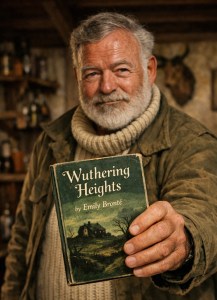
In 1934 Ernest Hemingway gave a young writer his advice and suggested a list of books any aspiring author should read…
In 1934 Ernest Hemingway gave a young writer his advice and suggested a list of books any aspiring author should read…
Another list of writing competitions with deadlines in the coming month.

The Globe Soup Open competition, with a Grand Prize of £2,000, closes on 16 December.
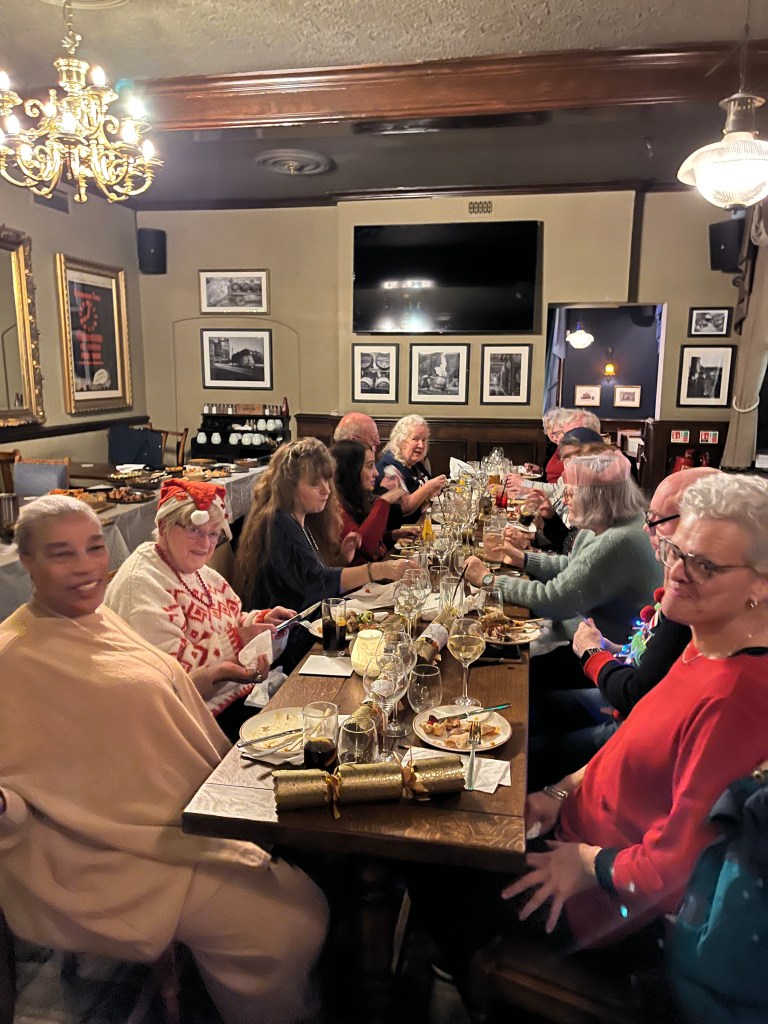

Thanks go to Ethel for organising a very successful Christmas Party! We met old friends, exchanged intriguing gifts, and struggled with Mike’s quote-based quiz. A good time was had by all!
Merry Christmas!

The Daily Telegraph has a poetry competition. UK residents only, no cash prize but a year’s subscription, publication and performance in a short film. The theme is ‘Mothers’.
My latest list is here.


Our anthology of entries to the Michael Round Prize is now available on Amazon! The paperback is priced at £8.99 and the Kindle version at £3.00 (outside the UK it may be a few days more before it appears). The cover design, by our own Jo Bodley, includes elements that refer to several of the stories. The main pomegranate motif is from the Palestinian embroidery tradition of tatreez, mentioned in the winning story.
Please do buy copies (they make great Christmas presents) and give us good reviews.

Our next gathering will be our Annual Christmas Social, held upstairs at the Spread Eagle, Croydon, at 7:30 p.m. on Monday, 8th December. Partners and friends are welcome.
The cost is £20, which includes a delicious buffet and another of Mike’s quizzes!
We also invite you to bring along a literary-themed Secret Santa gift (up to £10) to share in the festive spirit.
Debi Alper on Six Mistakes Almost All Authors Make.


 Croydon Writers